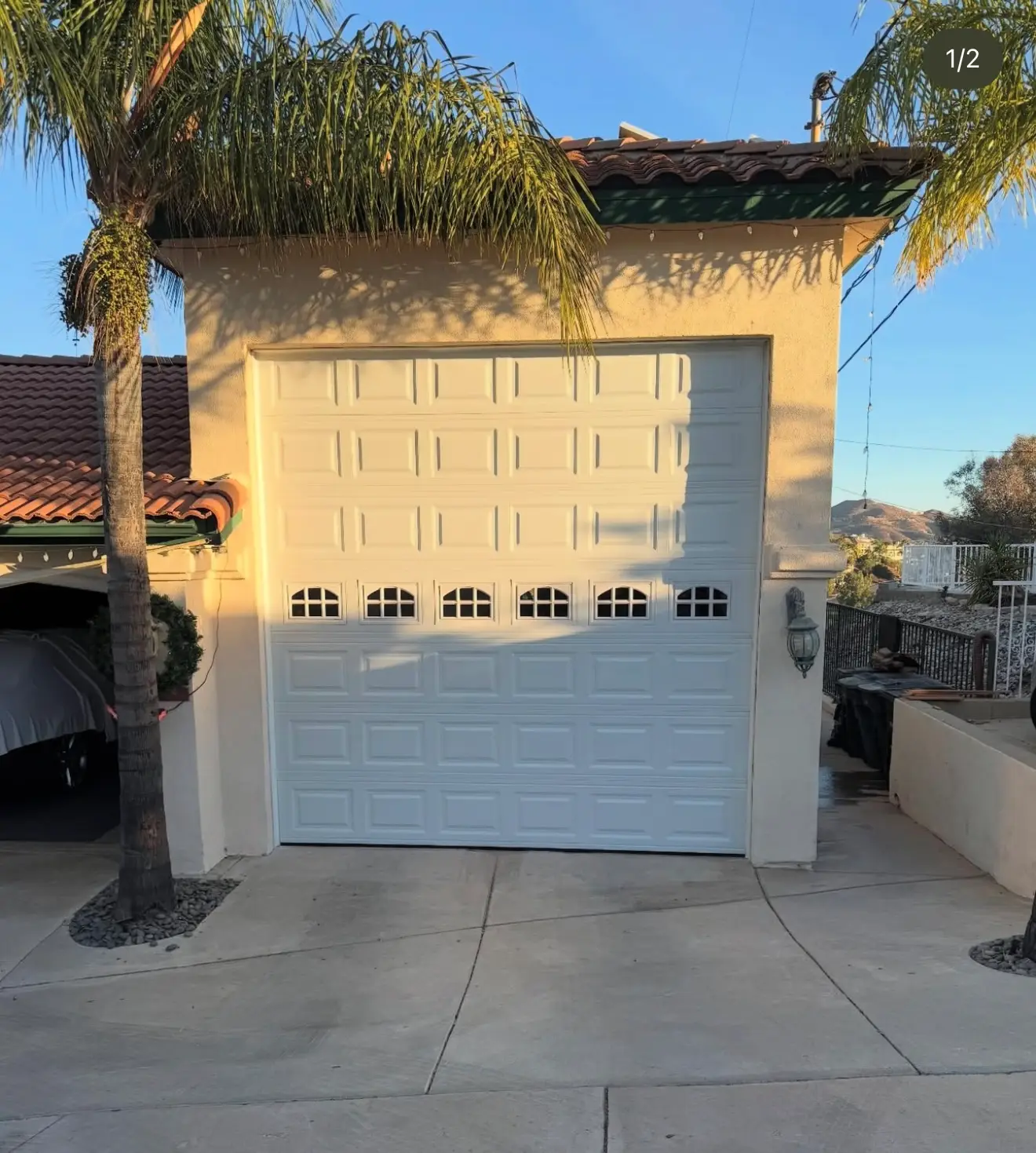
A weakening spring may change how a garage door sounds, opens, or closes. Common signs your garage door spring is about to break include new noises, slower lifting, uneven movement, and reduced control.
Cali Pros Garage Door advises homeowners to stop repeated operation when these changes appear. Some springs still fail suddenly without a clear warning. Homeowners seeking garage door service in Menifee should never touch or test high-tension spring hardware.
Can a Garage Door Spring Break Without Warning?
Yes, a garage door spring can break without showing an obvious warning. Metal fatigue develops as the door completes repeated opening and closing cycles.
Some springs begin making noise or changing the door’s movement. Others appear normal until the coil suddenly separates.
A visual inspection cannot determine exactly how many cycles remain. Surface condition also does not reveal every weakness inside the metal.
Spring performance depends on several factors:
- Door weight
- Spring size
- Spring cycle rating
- System balance
- Daily use
- Corrosion
- Installation quality
- Connected hardware condition
A spring may wear faster when it does not match the door’s weight. Poor balance can also place added stress on cables, drums, rollers, and the opener.
The seven warning signs below indicate that an inspection may be needed. They do not provide a guaranteed prediction of failure.
How Does a Garage Door Spring Support the Door?
A residential garage door may weigh hundreds of pounds. The spring system counterbalances much of that weight.
The opener does not carry the full door by itself. It guides a balanced door along the tracks while the springs provide lifting support.
A torsion system commonly includes:
- One or more springs
- A metal shaft
- Cable drums
- Lift cables
- Bottom brackets
An extension system normally uses springs along both horizontal tracks. Pulleys and lift cables transfer the spring force to the door.
The counterbalance system supports movement in both directions. It helps lift the door and prevents uncontrolled closing.
A weakening spring can transfer more load to other components. The opener may sound louder, cables may lose proper tension, and the door may move unevenly.
Spring problems can also contribute to:
- Worn opener gears
- Damaged drive belts
- Frayed lift cables
- Roller wear
- Track stress
- Loose hinges
- Uneven panel movement
These components should be inspected together. Replacing one visible part may not correct the cause of the operating problem.
Sign 1: New Creaking, Popping, or Groaning Near the Spring
A new noise near the spring assembly can indicate changing spring movement. The sound may appear during the first few inches of travel.
Popping can occur when coils move unevenly. Groaning may develop as the spring works under increasing strain.
Corrosion can also create rougher coil movement. The sound may become more noticeable during cooler mornings or after long periods without use.
Not every noise comes from a spring. Similar sounds may come from:
- Dry hinges
- Worn rollers
- Loose hardware
- Bent tracks
- Opener rails
- Damaged panels
The location and timing of the noise matter. A sound near the opener motor requires a different inspection from one above the door opening.
Homeowners should not touch the spring to locate the noise. Random lubricant should not be sprayed across the complete system.
Garage door springs require products and procedures suited to the installed hardware. Lubrication cannot repair metal fatigue or restore lost spring strength.
New and repeated spring-area noises deserve professional attention, especially when they occur with movement changes.

Sign 2: The Garage Door Starts Opening More Slowly
A garage door that suddenly opens more slowly may have reduced counterbalance support. The opener must work harder when a spring loses strength.
The change may begin near the floor. The door can hesitate before rising or move slowly through the first section.
Other common observations include:
- A delayed response after pressing the remote
- Pausing during upward travel
- Stopping before reaching full height
- Opening more slowly each week
- Requiring several attempts to rise
Slow movement does not confirm a spring problem by itself. Worn rollers, binding tracks, opener damage, or low motor power can create similar symptoms.
The door may also move slowly because of damaged panels or added weight. Storage hooks and accessories should never be attached to door sections without proper approval.
Repeatedly running the opener can worsen connected damage. The motor and drive system were designed to move a properly balanced door.
A door that continues slowing down should remain unused until the cause is identified.
Sign 3: The Door Moves Unevenly, Shakes, or Hesitates
Uneven movement can indicate a change in spring or cable tension. One side may begin rising before the other.
The door may shake through part of its travel. Panels can also appear crooked inside the opening.
An inspection from Cali Pros Garage Door checks the springs, cables, drums, rollers, and tracks because uneven movement does not identify one failed part.
Common movement changes include:
- One side lifting higher
- Jerking during opening
- Hesitating near a track curve
- Shaking while closing
- Panels shifting out of alignment
- Rollers binding inside a track
Uneven lifting may be more noticeable on extension-spring systems. Each side uses a separate spring and cable arrangement.
Torsion systems can also move unevenly when cables lose tension or a drum develops a problem.
Continued use can pull the door farther out of alignment. Rollers may leave the tracks, and panels can twist under uneven loading.
The opener should not be used to force a crooked door. A door hanging lower on one side can drop or bind without warning.
Sign 4: The Garage Door Closes Faster or With Less Control
A spring system helps control the door’s weight while closing. Reduced spring tension may cause the door to descend faster.
The change can begin gradually. A door that previously closed smoothly may start dropping during the final section.
Serious warning signs include:
- Faster downward movement
- Rough or jerky closing
- Slamming near the floor
- One side dropping first
- The opener struggling to slow the door
- Panels shaking during descent
A garage door that begins falling should not remain in use. People, pets, vehicles, and stored items should stay clear.
The opener may reverse when it detects resistance. That safety response does not correct a weak counterbalance system.
A door can also close roughly because of track damage, poor opener limits, or worn rollers. A complete inspection should identify the cause.
The system should never be tested by standing under the door. Hands and tools should remain away from the tracks and bottom brackets.
Sign 5: The Garage Door Opener Sounds Strained or Vibrates
A weak spring can make the opener carry more lifting load. The motor may sound louder or vibrate during operation.
The opener rail can shake as the door begins moving. The motor housing may also vibrate more than usual.
Other symptoms include:
- Humming before movement begins
- Stopping during upward travel
- Reversing without a clear obstruction
- Moving the door only a few inches
- Grinding from the opener housing
- Slower travel despite normal settings
Opener strain does not confirm spring failure. Worn gears, damaged belts, weak capacitors, and motor problems can produce similar symptoms.
Track resistance and worn rollers may also overload the opener. A professional inspection should separate mechanical door problems from opener faults.
Professional garage door opener repair may be needed when the motor, drive system, or controls cause the strain rather than the spring. The company services opener motors, controls, sensors, and drive components across Menifee and surrounding Riverside County communities.
Forcing repeated opener cycles can damage the drive system. Stop operation when the opener sounds strained and the door movement has also changed.
Changes in movement or sound do not confirm which spring or connected component is failing. Call 951-218-2664 or request a garage door spring inspection before continuing to operate the door.
Sign 6: The Spring Shows Rust, Corrosion, or Distorted Coils
Visible spring changes can be observed from a safe distance. Homeowners should not touch, clean, measure, or pull the spring.
Surface rust does not prove that immediate failure will occur. Heavy corrosion can still justify a professional inspection.
Possible concerns include:
- Rust across several coils
- Flaking metal
- Irregular coil spacing
- A stretched appearance
- Distorted spring shape
- Heavy corrosion near mounting points
Corrosion can weaken metal over time. It may also interfere with smooth coil movement.
An extension spring may appear stretched or uneven compared with the spring on the opposite side. Torsion springs should remain tightly coiled when intact.
A visible separation in a torsion spring is different from surface wear. A clear gap usually means the spring has already snapped.
No coating, lubricant, or household treatment can restore fatigued spring metal. Replacement requires correct sizing and trained handling.
Sign 7: The Cables Look Loose or the Door Tension Changes
Lift cables work with the spring system to raise and lower the door. A change in spring tension can affect cable position.
One cable may appear slack beside the track. Another may look loose around the drum.
Possible symptoms include:
- A hanging cable
- One side sitting lower
- Uneven lifting
- Sudden cable slack
- The door losing controlled movement
- A cable rubbing against nearby hardware
Loose cables do not always mean the spring is about to break. The cable, drum, bottom bracket, or track may already have a separate problem.
These parts remain connected to high-tension hardware. Homeowners should never pull, cut, rewind, or reposition a loose cable.
A cable hanging beside a track can become caught in moving parts. Operating the opener may cause additional track or panel damage.
Keep the door closed when it can remain closed safely. An unstable open door requires immediate professional guidance.
What Are the Signs That the Spring Has Already Broken?
Several symptoms usually indicate that failure has already occurred. These should not be counted as advance warnings.
A broken torsion spring often creates a sudden, sharp bang. The sound may resemble an object striking the garage wall.
Other confirmed or likely breakage signs include:
- A visible gap in the torsion coil
- The opener running without lifting the door
- The door opening only a few inches
- An extremely heavy door
- Loose lift cables
- Crooked movement
- One side hanging lower
- A separated extension spring
A loud bang, visible coil separation, or limited opening may require professional garage door spring replacement. Cali Pros lists loud bangs, visible spring gaps, and doors stuck partway as common reasons for spring service.
| Possible Early Warning | Likely Existing Break |
|---|---|
| New creaking or groaning | Sudden loud bang |
| Slower opening | Door opens only a few inches |
| Uneven or hesitant movement | Visible torsion-spring gap |
| Opener sounds strained | Opener runs but cannot lift |
| Rust or distorted coils | Door becomes extremely heavy |
| Changing cable tension | Cables hang loose after failure |
Do not repeatedly press the remote after a suspected break. The opener may damage its gears, belt, rail, or motor.
Do not pull the emergency release while an unsupported door remains open. The door may fall when disconnected from the opener.
How Do Torsion and Extension Spring Warning Signs Differ?
Torsion and extension springs support the same general purpose. Their locations and operating methods differ.
Torsion Springs
Torsion springs usually sit on a metal shaft above the opening. The springs rotate as the door moves.
Cables wrap around drums at each end of the shaft. These cables connect the spring force to the bottom of the door.
Possible torsion-spring concerns include:
- New noise above the opening
- Slower lifting
- Uneven cable tension
- Rust or distorted coils
- Increased opener strain
- Reduced control during closing
A visible gap in a torsion coil normally indicates an existing break.
Extension Springs
Extension springs commonly run beside the horizontal tracks. They stretch as the door closes and contract as it opens.
Possible extension-spring concerns include:
- Uneven stretching
- One spring sagging
- One-sided lifting
- Visible distortion
- Loose pulleys
- Changing cable tension
- Missing or damaged safety cables
DASMA states that extension springs remain under high tension when the door is closed. It recommends a containment cable through each spring to limit movement after breakage.
Homeowners should only observe the spring type from a distance. Both systems require trained handling.
What Other Garage Door Problems Can Look Like Spring Failure?
Several garage door problems create symptoms similar to spring wear. A noisy or uneven door does not automatically need a new spring.
Worn Rollers
Worn rollers may shake, drag, or grind inside the tracks. Damaged bearings can slow the door and strain the opener.
Frayed Lift Cables
Frayed or damaged cables may cause crooked lifting. A cable can also lose tension after a drum or spring problem.
Bent or Loose Tracks
Bent tracks can restrict movement and create popping sounds. Loose mounting brackets may allow the tracks to shift.
Damaged Cable Drums
A cable may wind incorrectly when a drum moves or wears. This can change the height of one side.
Opener Problems
Worn gears, belts, controls, and motor parts can cause slow or interrupted operation.
Damaged Panels or Hinges
A bent panel can bind during travel. Loose hinges can also create noise and uneven movement.
Garage door cable and roller replacement may be required when worn rollers or damaged cables cause shaking and crooked movement. The service page identifies hanging cables, uneven lifting, and opener strain as common cable-related symptoms.
A full-system inspection is more reliable than diagnosing one component from a single symptom.
What Should Homeowners Do After Seeing a Warning Sign?
Stop repeated operation when the door begins moving unevenly, closing faster, or producing new spring-area noises.
Follow these safety steps:
- Keep people and pets away from the door
- Do not stand beneath an open or unstable door
- Avoid touching springs, cables, drums, or bottom brackets
- Do not pull or cut a loose cable
- Do not force the opener through repeated cycles
- Arrange a professional inspection
Move vehicles only when the door remains stable and can be operated safely. An unstable open door should remain untouched.
DASMA garage door safety guidance explains that extension springs remain under high tension. A containment cable can help control a broken extension spring.
Counterbalance components include brackets, pulleys, winding cones, springs, and related hardware under tension. These parts require proper tools and training.
Homeowners should not perform a manual balance test when spring damage is suspected. Lifting or releasing an unsupported door can expose its full weight.
Can Garage Door Maintenance Prevent Spring Failure?
Maintenance cannot guarantee that a garage door spring will never break. It can reveal visible wear and poor system balance.
Routine service from Cali Pros Garage Door may identify cable damage, worn rollers, loose hardware, or opener strain before connected parts suffer more damage.
A professional visit may include:
- Visual spring inspection
- Cable and drum checks
- Roller inspection
- Hardware tightening
- Track review
- Door balance testing
- Opener travel checks
- Safety-reversal testing
Regular garage door maintenance in Menifee is especially useful for heavily used doors. The company promotes annual tune-ups covering lubrication, hardware tightening, safety reversal, and wear checks.
Maintenance cannot reverse metal fatigue. A spring that has lost strength or developed serious corrosion may still require replacement.
Frequent garage use can add many cycles each year. Households that use the garage as a main entrance may wear spring systems faster.
Hot, dusty Inland Empire conditions may also affect rollers, tracks, seals, and exposed hardware. Spring size, door balance, and daily cycles remain central factors.
Conclusion: Stop Using the Door When Its Movement Changes
A weakening spring may cause new noises, slower lifting, uneven movement, faster closing, opener strain, visible corrosion, or changing cable tension. Some springs still break without warning. A loud bang or visible torsion-coil gap usually means failure has already occurred.
For homeowners in Menifee and nearby Riverside County communities, Cali Pros Garage Door can inspect the full counterbalance system before recommending repair. Homeowners preparing for service can also review current California garage door spring replacement costs.
For local spring service, Cali Pros Garage Door can inspect the springs, cables, drums, rollers, tracks, and opener. Call 951-218-2664 or contact Cali Pros Garage Door to schedule an inspection.
Frequently Asked Questions
1. Can a garage door spring break without showing any warning signs?
Yes. Garage door springs can fail without obvious warning because metal fatigue may develop inside the coil. Changes in sound, speed, balance, or closing control can suggest wear, but no checklist can predict every break. Stop using the door when its movement changes and arrange an inspection today.
2. Does a loud bang mean the garage door spring is about to break?
A loud bang usually means the spring has already broken, not that it’s merely about to fail. Check only from a safe distance. A visible gap in a torsion spring, loose cables, or a door that opens only a few inches also points to existing failure and requires professional service without further use.
3. Can a weak garage door spring damage the opener?
Yes. A weak spring can force the opener to carry more of the door’s weight, which may strain the motor, gears, belt or rail. Louder operation, vibration, slow lifting, or repeated stopping can indicate added load. Stop cycling the opener and have the full door system inspected before using it again.
4. Is rust on a garage door spring a sign that it needs replacement?
Rust or corrosion does not prove that a spring will break immediately, but it can weaken the metal and affect coil movement. Heavy rust, flaking, distorted coils, or uneven spacing justify professional inspection. Do not touch, clean, stretch, lubricate, or adjust a questionable spring yourself now.
5. Is it safe to manually lift a garage door with a suspected broken spring?
No. A garage door with a suspected broken spring may be extremely heavy and unstable. Manually lifting it or pulling the emergency release can cause the door to fall. Keep people, pets, and vehicles clear, stop using the opener, and arrange trained service before trying to move the door again today.
6. Should both garage door springs be replaced when one breaks?
Not always, but paired replacement is often recommended when two matched springs have the same age and cycle history. The other spring may be close to failure and can affect balance. A technician should inspect the system, confirm spring specifications, and explain the repair scope first in writing.