How much does garage door spring replacement cost in California? Most homeowners only ask that question after they hear the bang from the garage and the door stops moving. Over 30 percent of residential garage doors need spring replacement within the first 10 years, and California pricing runs well above the national average.
Cali Pros Garage Door serves Menifee and Riverside County homeowners dealing with this repair every week. This 2026 guide breaks down every cost factor, including Inland Empire city pricing that most cost guides leave out entirely.
What Does Garage Door Spring Replacement Cost in California?
Nationally, spring replacement runs $150 to $350 per spring including parts and labor. California pushes that range higher across all regions.
The realistic range for a single spring in California is $200 to $500. Two-spring jobs, the recommended approach when one breaks, run $350 to $700 depending on spring type and location.
| Service | California Average | Low End | High End |
|---|---|---|---|
| Single torsion spring | $300 | $200 | $500 |
| Two torsion springs | $500 | $350 | $700 |
| Single extension spring | $175 | $120 | $275 |
| Pair of extension springs | $300 | $200 | $400 |
| Spring and cable replacement | $425 | $275 | $650 |
| Spring type conversion | $600 | $400 | $800 |
Cost by City and Region Across California
California is not one market. A spring replacement in Los Angeles can cost two to three times the same job in Riverside County.
Los Angeles and surrounding cities carry the highest labor rates in the state. Single spring replacement in LA runs $200 to $700. Dual-spring jobs reach $400 to $1,400 in neighborhoods like Beverly Hills and Pacific Palisades. Burbank and Pasadena sit in a lower range of $150 to $350 for single-spring doors.
The San Francisco Bay Area averages around $311 for garage door repair work. Expect $225 to $450 for a dual-spring replacement across most Bay Area cities.
The Inland Empire and Riverside County are among the most affordable regions in California for this repair. Homeowners in Menifee, Murrieta, Temecula, Wildomar, and Lake Elsinore typically pay $200 to $330 for a single spring and $350 to $550 for a two-spring job.
| City or Area | Single Spring | Two Springs |
|---|---|---|
| Los Angeles | $200–$700 | $400–$1,400 |
| Beverly Hills | $250–$700 | $500–$1,400 |
| Burbank / Pasadena | $150–$350 | $300–$600 |
| San Francisco Bay Area | $200–$400 | $350–$550 |
| Menifee / Sun City | $200–$330 | $350–$500 |
| Murrieta / Wildomar | $185–$320 | $330–$480 |
| Temecula / Lake Elsinore | $185–$325 | $340–$490 |
Torsion vs Extension Springs: Cost Breakdown by Spring Type
The spring type on a door is the single biggest cost driver. Cali Pros Garage Door technicians work on both systems across Menifee and Riverside County, and the difference in parts and labor is significant.
Torsion Springs
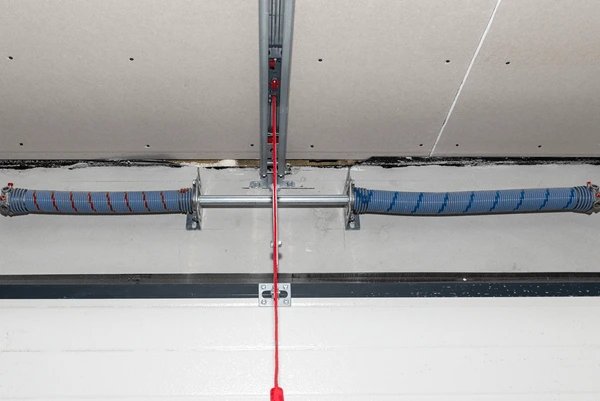
Torsion springs mount on a metal shaft above the garage door opening. They store energy by twisting under load and release it to assist the lift. Most Inland Empire homes built in the last 20 years use torsion systems. They operate more quietly, last longer, and stay on the shaft when they break rather than flying across the garage.
Torsion spring replacement in California runs $200 to $500 per spring including labor. The higher cost reflects the specialized winding bars required, the precision needed to set correct tension, and the heavier-duty components involved.
Extension Springs
Extension springs run along the horizontal tracks on each side of the door and store energy by stretching. They are more common on older single-car doors built before the mid-2000s. Extension spring replacement in California costs $120 to $275 per spring.
The trade-off is a shorter lifespan and higher injury risk at failure. An uncontained extension spring can snap across the garage with significant force. Replacing both springs during the same visit is standard practice on all door types, regardless of which one failed first.
What Drives the Price Up or Down
Several factors pull the final bill above or below the ranges in the tables above.
Door size and weight matter because heavier doors require stronger springs. A double-car insulated door weighs significantly more than a single-panel door. Double-door spring jobs add $15 to $30 per spring over single-door pricing.
Spring quality and cycle rating affect upfront cost. Standard springs carry a 10,000-cycle rating. High-cycle springs rated for 25,000 to 50,000 cycles cost $60 to $100 more per spring. For a family using the garage as the main entrance four to six times daily, the upgrade pays for itself well before the next replacement cycle.
Service timing changes the rate. Scheduled weekday appointments carry standard pricing. Evenings, weekends, and same-day emergency calls add $75 to $150 to any job. A spring that breaks on a Sunday morning costs more to fix than the same repair on a Tuesday afternoon.
Conditions of related hardware can expand scope. Frayed cables or bent cable drums discovered during a spring job add to the total. Bundling those repairs in one visit is always cheaper than two separate service calls.
Why Southern California’s Climate Wears Springs Faster
Riverside County homeowners face conditions that accelerate spring wear faster than national cost guides acknowledge. Cali Pros Garage Door handles this specific climate impact on Menifee doors every season, and the pattern is consistent.
Heat and thermal cycling are the primary factors. Menifee and the surrounding Inland Empire regularly see summer temperatures above 105 degrees. Metal expands under heat and contracts when the temperature drops overnight. Repeated thermal cycling over years weakens spring coils at the metal level. Springs in hot inland climates reach end of life faster than identical springs in cooler coastal markets.
Santa Ana wind events deposit fine dust and debris into spring coils and track systems. Dust accelerates corrosion on bare steel and acts as an abrasive during each open-and-close cycle. Springs that go without lubrication during Santa Ana season wear measurably faster than maintained springs.
Dry air and low humidity in the Inland Empire reduce the protective surface layer on uncoated steel. This leaves spring metal more exposed to oxidation than springs in humid coastal zones. Standard 10,000-cycle springs in Menifee may reach failure earlier than their rated cycle life suggests.
Spring broken in Menifee or across Riverside County? Same-day spring replacement is available with upfront pricing before any work begins. Call (951) 218-2664 or schedule a visit online.
How Long Do Garage Door Springs Last in Riverside County?
Standard torsion springs carry a 10,000-cycle rating. One cycle equals one complete open-and-close of the door.
A family of four in Menifee using the garage as the primary entrance and opening the door five times per day burns approximately 3,500 cycles per year. At that rate, standard springs last roughly seven years before reaching the rated end of life.
| Spring Type | Cycle Rating | Est. Lifespan at 3,500 Cycles/Year |
|---|---|---|
| Standard | 10,000 | ~7 years |
| High-cycle | 25,000 | ~17 years |
| Heavy-duty high-cycle | 50,000 | ~28 years |
High-cycle springs cost $60 to $100 more per spring at installation. A Menifee household at 3,500 cycles per year replaces standard springs twice over 15 years. High-cycle springs eliminate that second replacement entirely. The math favors upgrading for any high-use household in the Inland Empire.
Signs Your Garage Door Spring Needs Replacing
Garage door springs give clear signals before complete failure. Catching these signs early avoids the emergency service premium that comes with a sudden break.
Loud Bang From the Garage
A sharp bang, often described as a gunshot sound, is the most unmistakable sign. That sound is a torsion spring snapping under load. The door will not lift after this point.
Door Feels Unusually Heavy
A door that takes real effort to push up manually is working without adequate spring assistance. Healthy springs carry most of the door’s weight. A heavy door points to spring fatigue rather than an opener problem.
Visible Gap in the Spring Coil
A broken torsion spring leaves a visible gap in the wound coil above the door. The coil separates at the break point. This is a clear visual confirmation of failure.
Door Opens a Few Inches and Stops
A door that opens only three to four inches before the opener halts is triggering a safety stop. The opener detects it is working harder than normal and shuts down to avoid motor damage.
Squeaking or Grinding During Operation
Unusual noise from a door that ran quietly before indicates a spring nearing end of cycle life. The noise comes from increased friction in the coil combined with insufficient lubrication.
Same-Day and Emergency Repair Costs in the Inland Empire
A spring that breaks early on a Monday morning with the car trapped inside is an emergency. Emergency calls carry a premium across all Southern California markets.
Standard weekday appointments in Riverside County carry base labor rates. Evening and weekend calls add $75 to $150 to the total. Emergency dispatch outside business hours can add $100 to $200 on top of the standard repair cost.
For homeowners in Menifee, Murrieta, Temecula, and Wildomar, working with a locally based team cuts emergency response time significantly. A contractor dispatching from within Riverside County reaches the address faster than one driving in from Los Angeles or San Diego. Shorter drive time matters when the repair needs to happen before a morning commute.
How to Get a Fair Quote in California
A written quote before work begins is non-negotiable for any spring job. A phone estimate that gives one number without asking about spring type, door weight, or cable condition is not a real quote.
Ask the technician to identify the spring type and confirm one or both springs need replacement. Ask for a full cost breakdown covering parts, labor, and any service call fee. Ask for the exact cycle rating on the replacement spring being installed.
Before work starts, confirm the contractor holds a valid California license. This takes under a minute with the CSLB License Check tool by searching the company name or license number. Licensed contractors carry liability insurance that protects the property during the job. Unlicensed operators offer no recourse when something goes wrong on site.
Conclusion
Garage door spring replacement cost in California ranges from $120 for a basic extension spring job in the Inland Empire to over $700 for a complex torsion system in Los Angeles. Spring type, door size, regional labor rate, and service timing all shift the number. Riverside County homeowners hold a meaningful cost advantage over LA and Bay Area markets.
Southern California’s heat, Santa Ana winds, and dry air wear springs faster than most national guides acknowledge. Upgrading to high-cycle springs at the next replacement reduces total cost over the life of the door for any Inland Empire household opening the garage multiple times daily. Cali Pros Garage Door is based in Menifee and serves Riverside County with same-day spring replacement, written quotes before any work begins, and licensed technicians on every job.
Cali Pros Garage Door covers spring replacement across Menifee, Murrieta, Temecula, Wildomar, and Lake Elsinore. Call (951) 218-2664 or request a free estimate and a licensed technician will confirm spring type, door weight, and final cost before touching the door.
Frequently Asked Questions
How much does garage door spring replacement cost in Menifee, CA in 2026?
Single spring replacement in Menifee, California runs $200 to $330 in 2026, including parts and labor. A two-spring replacement, which is the recommended approach when one spring breaks, typically costs $350 to $500 depending on spring type and door size. These rates reflect Inland Empire labor pricing, which sits well below Los Angeles rates for the same work. A standard torsion spring job on a double-car door in Menifee lands toward the higher end of that range, while a single extension spring on an older single-car door comes in at the lower end. Emergency or same-day calls add $75 to $150 on top of those base rates. Requesting a written quote before work begins keeps the final number aligned with what was agreed.
Should both garage door springs be replaced at the same time?
Both springs on a door wear at the same rate because they share the lifting work equally on every cycle. When one spring breaks, the second has been through exactly the same number of stress cycles and is operating near its own end of life. Replacing only the broken spring and leaving the worn one in place typically results in a second failure within months. That means paying another full service call fee and labor cost for a job that could have been completed in one visit. Most licensed California technicians recommend replacing springs in matched pairs as standard practice. The cost of replacing both during one visit is substantially lower than the combined cost of two separate callouts, even when both springs and the full labor cost are included in the first visit.
Why do garage door springs break faster in Southern California?
Southern California’s climate puts extra stress on garage door springs compared to moderate coastal regions. The Inland Empire sees summer temperatures above 100 degrees regularly. Metal expands under heat and contracts when the temperature drops overnight, and repeated thermal cycling over years weakens spring coils through metal fatigue. Santa Ana wind events carry fine dust that settles into spring coils, increasing friction and accelerating corrosion on bare steel. The dry air in Riverside County also strips the protective surface from uncoated steel faster than humid climates would. The combined result is that standard 10,000-cycle springs in Menifee, Murrieta, and Temecula can reach failure earlier than their rated cycle life. Lubricating springs every four to six months rather than annually is the most effective step to offset this climate impact.
What is a high-cycle garage door spring and is it worth it in Menifee?
A high-cycle spring carries a rating of 25,000 or more cycles compared to the 10,000-cycle rating on standard residential springs. One cycle equals one full open-and-close of the door. A Menifee household opening the garage five times per day runs through approximately 3,500 cycles per year, which exhausts a standard spring in about seven years. A 25,000-cycle spring at the same usage rate lasts roughly 17 years. The additional cost per spring is typically $60 to $100 at installation. For a family using the garage as the primary entrance multiple times daily, that upfront cost eliminates at least one full replacement cycle over the life of the door. Oil-tempered high-cycle springs also handle thermal cycling and dust exposure better than standard galvanized springs, which matters specifically in Riverside County conditions.
How long does a garage door spring replacement take in Riverside County?
Most residential spring replacements in Riverside County complete in one to two hours from start to finish. The technician inspects the full spring system, removes the failed spring, installs the replacement with correct tension calibration, tests the door balance manually, then runs the door on the opener with safety sensors active before leaving. Two-spring jobs take slightly longer than single-spring jobs because both sides of the shaft need attention. Frayed cables or worn cable drums discovered during the visit add time and cost to the total. Same-day availability is common across Menifee, Murrieta, Temecula, and Wildomar for standard spring jobs when parts are stocked on the service vehicle, which most locally based teams carry as standard inventory.
How do I know if the spring is broken or just needs adjustment?
A broken spring produces a loud bang, often heard from inside the house. After the break, the door feels extremely heavy, refuses to open more than a few inches, or drops when lifted manually. A visible gap in the torsion spring coil above the door is a definitive sign of a full break. A spring that needs adjustment rather than replacement shows different symptoms. The door may feel slightly heavier than usual, open unevenly, or move more slowly on the opener without making a loud noise. In some cases the spring has lost tension without snapping and can be adjusted using proper winding bars by a licensed technician. Attempting to adjust spring tension without the correct tools carries a serious injury risk, regardless of the spring condition.