A garage door that won’t open at 7 a.m. turns a normal morning into a scramble. Before assuming the worst, a few quick checks solve most cases in under five minutes. Cali Pros Garage Door’s emergency garage door repair technicians walk homeowners through this exact sequence on the phone every week. This guide follows that same order, from the simplest fix to the ones that need a professional.
Why a Garage Door Suddenly Stops Opening in Menifee
Most opening failures trace back to one of three systems: power, safety sensors or the spring and cable system. Menifee’s heat and dust put extra strain on all three. A door that worked fine yesterday can stop cold overnight.
The same pattern shows up across Riverside County, including in Lake Elsinore and neighboring cities. Hot afternoons expand metal hardware and shift opener settings. Cold mornings do the opposite, tightening components and adding load.
None of this means a full replacement is needed. Most opening failures come down to one specific part or setting. The next steps narrow that down quickly.
Check These Three Things Before Calling Anyone
Start with power. Confirm the opener is plugged in and check the breaker box for a tripped switch. A door that makes zero sound when the button is pressed usually points here first.
Next, check the remote. Replace the batteries and try the wall button instead. Many openers also have a lock or vacation mode that disables remotes when accidentally triggered.
Finally, check for a manual lock bar on the door itself. Cali Pros Garage Door technicians see all three causes to resolve calls before a truck ever gets dispatched. Persistent issues after these checks usually need a garage door opener repair visit.
Quick Reference: Match the Symptom to the Likely Cause
The pattern of what happens, not just that the door won’t open, points straight to the cause. This table matches the most common symptoms to their likely source.
| Symptom | Likely Cause | Next Step |
|---|---|---|
| No sound at all when pressing the button | Power outage, unplugged opener or tripped breaker | Check the outlet and breaker box |
| Motor hums or clicks but the door doesn’t move | Stripped gears, disengaged trolley or broken spring | Inspect the emergency release cord |
| Door only opens with the wall button, not the remote | Dead remote batteries or lock mode engaged | Replace batteries, check for lock mode |
| Door feels stuck or extremely heavy | Broken or weakened spring | Stop and call a technician |
| Door opens a few inches then reverses or stops | Sensor misalignment or track obstruction | Clean sensors, clear the track |
| Opener runs the full cycle but door barely lifts | Worn cables or unbalanced door | Schedule a balance check |
A single symptom can have more than one cause, so this table narrows the search rather than confirming it. The sections below cover each scenario in more detail.
Is the Opener Running But the Door Isn’t Moving
A motor that hums, clicks or runs without lifting the door points to one of two things. Either the trolley has disconnected from the drive carriage, or the internal gears have stripped. Both are common after years of heavy use.
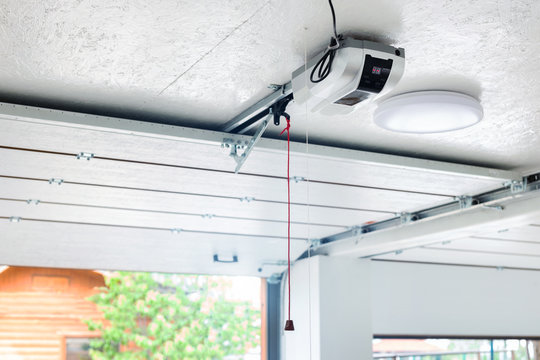
Look for a hanging cord near the motor rail, usually red or orange. Pulling it releases the door from the opener for manual operation. An already-pulled cord, sometimes released by accident, is often the fix.
Stripped gears feel different: the motor keeps running with no resistance at all. Cali Pros Garage Door technicians carry gear kits and full opener replacements for this exact failure. Neither repair is a safe DIY project given the moving parts involved.
Signs the Spring or Cable Has Failed
A door that will not budge, even with the opener disconnected, usually means a broken spring. The spring counterbalances the door’s full weight. Without it, the door becomes too heavy to lift by hand or by motor.
Look for a visible gap in the torsion spring mounted above the door. A loud bang heard earlier in the day, often described as a gunshot sound, is a spring snapping under load. Loose or hanging cables point to the same failure.
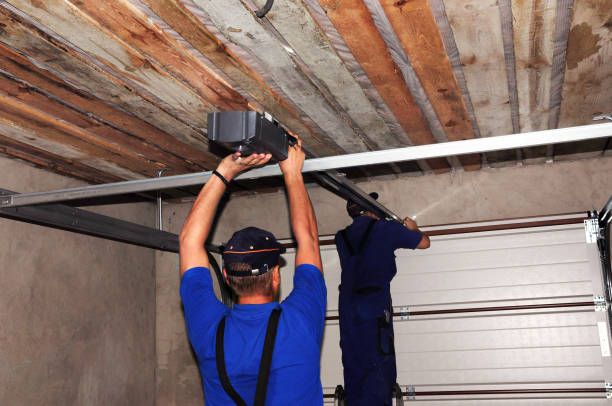
Springs and cables store enormous tension and should never be adjusted or replaced without training. A licensed technician carries manufacturer-rated parts for same-visit replacement. Trying to force a door with a broken spring risks serious injury.
A door that won’t budge could mean a broken spring, and forcing it risks injury. Same-day appointments are available across Menifee when scheduling allows, with upfront pricing before any work begins. Call 951-218-2664 or get a same-day estimate before attempting anything further.
Why Bright Sun and Dust Stop the Sensors From Working
Photo eye sensors near the floor are designed to stop the door from closing on an obstruction. On some openers, a blocked or misaligned sensor also prevents the opener from starting any cycle at all, including opening.
Menifee’s bright afternoon sun can wash out the sensor beam on west-facing garages. Desert dust settles on the lenses faster than in milder climates. Both problems look identical to a wiring failure until the lenses get wiped clean.
DASMA, the industry association for door and opener manufacturers, recommends mounting photo eyes no higher than six inches up. A unit mounted too high or knocked out of position stops working correctly. Wiping the lenses and rechecking alignment resolves most of these cases without a service call.
Simple Fix or Call a Professional
Most causes covered so far are safe for a homeowner to check. Dead batteries, a tripped breaker, a disconnected trolley or dirty sensors all fall into this category. None of these require special tools or training.
Springs, cables and stripped gears sit in a different category entirely. These repairs involve stored tension or precise mechanical work. A wrong move here risks injury, not just a bigger repair bill.
A simple rule covers most situations. Button, battery and lens fixes are safe to try. Spring, cable and motor housing repairs call for a professional.
What It Costs to Fix a Garage Door That Won’t Open in Menifee
Repair costs depend entirely on which part failed. The table below reflects typical 2026 pricing across Menifee and Riverside County, consistent with the ranges used throughout this site.
| Cause | Typical 2026 Cost | Difficulty |
|---|---|---|
| Dead remote batteries | $5-$10 | Easy |
| Tripped breaker or unplugged opener | Free | Easy |
| Lock mode accidentally engaged | Free | Easy |
| Disconnected trolley (emergency release) | Free | Easy |
| Dirty or misaligned sensors | Free, or $75-$150 with a technician | Easy to medium |
| Stripped gears or opener replacement | $300-$700 | Professional |
| Broken spring | $200-$500 | Professional only |
| Broken or frayed cables | $150-$300 | Professional only |
These figures are general estimates, and the exact price depends on the door, the opener brand and site access. A technician confirms the final cost during diagnosis, before any repair begins.
Getting the Door Moving Again Safely
Most doors that won’t open come down to power, a disconnected trolley or a dead remote battery. These take minutes to check and cost nothing to fix. Springs, cables and stripped gears are the exceptions that call for a professional.
A door that won’t close involves a different set of causes. This site’s guide on why the door won’t close covers that scenario in full. Cali Pros Garage Door handles both failure types across Menifee with same-day appointments and upfront pricing.
Cali Pros Garage Door answers these calls across Menifee every day, from a dead remote battery to a broken spring. The team explains the likely cause over the phone before anyone drives out. Call 951-218-2664 or request a same-day appointment to get the door moving again.
Frequently Asked Questions
1. Why does my garage door opener hum but the door won’t move?
A humming or clicking motor with no door movement means the trolley has disconnected or the internal gears have stripped. The trolley connects the opener’s drive system to the door itself through a metal arm. When the emergency release cord gets pulled, on purpose or by accident, the trolley disengages. The motor then runs with nothing attached to move. Reconnecting the trolley usually solves this instantly and costs nothing. Stripped gears are a different problem inside the motor housing itself. Plastic drive gears wear down after years of heavy use, especially on doors opening and closing several times a day. A stripped gear lets the motor spin freely without turning the drive mechanism that lifts the door. This repair is not a safe DIY project. It requires opening the motor housing near components under spring tension. A technician can usually tell the difference within a minute of listening to the motor and checking the trolley connection. Gear replacement kits or a full opener swap typically run $300 to $700 in the Menifee area. The exact price depends on the opener’s age and features.
2. Why won’t my garage door open with the remote but works with the wall button?
A garage door opener that responds to the wall button but not the remote usually points to the remote itself. Start with the batteries, since a weak battery is the single most common cause of remote failure. Fresh batteries that do not fix the problem point to a different cause. Most wall consoles include a lock or vacation mode button that disables all remote transmitters. Someone brushing against that button, often while carrying groceries or tools, can trigger it by accident. Check the wall console for a lit or blinking lock indicator before assuming the remote is broken. A remote that lost its programming, often after a power outage, is another common cause. Most openers have a Learn button on the motor unit for re-pairing a remote. Pressing that button and then the remote button within a few seconds usually restores the connection. Wireless interference from a nearby Wi-Fi router or security system can also weaken the signal on rare occasions. Moving those devices a few feet away from the garage sometimes resolves the issue without any reprogramming. A remote that still fails after batteries, lock mode and reprogramming likely needs replacement.
3. Can a garage door open manually if the power is out?
A garage door can be opened manually during a power outage using the emergency release cord. This cord hangs from the trolley near the motor unit, usually marked in red. Pulling it straight down disconnects the door from the opener’s drive system. Once disconnected, the door lifts by hand like a manual garage door. A standard residential door weighs 150 to 250 pounds, so lifting should feel manageable if the springs are healthy. A door that feels extremely heavy during manual lifting likely has a weak or broken spring. That is a separate problem from the power outage itself. Openers installed in California after July 2019 are required to include a battery backup system under state law. That backup should allow normal push-button operation during a power outage without using the manual release at all. A door that does not respond during an outage likely has a drained backup battery. This holds true even when the battery has worked before. Testing the backup periodically, by unplugging the opener and pressing the button, confirms it still works before an actual outage. After power returns, reconnecting the trolley by pulling the release cord toward the door restores normal automatic operation.
4. How do I know if a broken spring is why my garage door won’t open?
The clearest sign of a broken spring is a door that feels far too heavy to lift. This holds true even with the opener disconnected. Torsion springs mounted above the door counterbalance nearly all of the door’s weight during normal operation. A visible gap in the coil of the spring means it has already lost tension or snapped. A loud bang heard earlier in the day is often the sound of a spring breaking under load. Many homeowners compare it to a gunshot. The opener itself often provides a second clue. Modern openers include a safety feature that detects unusual resistance and halts the door mid-cycle rather than forcing it. A door that starts to lift, struggles audibly, then stops or reverses is showing classic signs of spring failure. Loose or hanging cables on either side of the door point to the same underlying problem. Springs and cables work together to support the door’s weight. None of these signs should be tested by pushing the opener repeatedly. That adds strain to a failing system. Springs store enormous mechanical tension and should only be handled by a trained technician with the correct tools. Same-day spring replacement is common in Menifee. The repair typically runs $200 to $500 depending on the spring type and door size.
5. Why does my garage door only open a few inches and then stop?
A garage door that opens a few inches and stops or reverses is being stopped by the safety sensor system. The two sensor units near the floor must have a clear, unobstructed line of sight between them. An object in the path breaks that beam and halts the door. Even something small, like a broom handle or a stray tool, is enough. Direct sunlight hitting the receiving sensor can cause the same symptom, especially on west-facing garages during afternoon hours in Menifee. Dust buildup on the lenses has a similar effect, since it scatters the beam enough to register as an obstruction. The fix usually starts with clearing the full path between both sensor units. Wiping both lenses with a dry cloth removes dust without needing any tools. Checking the indicator lights on each sensor confirms alignment status. A steady light usually means good alignment. A blinking light points to a problem. A door that keeps stopping in the same spot after cleaning and clearing sensors points elsewhere. A bent track or a limit setting may need adjustment. These deeper issues usually call for a technician to diagnose accurately.
6. How much does it cost to fix a garage door that won’t open in Menifee?
The cost to fix a garage door that won’t open in the Menifee area depends entirely on which part failed. The cheapest fixes cost nothing at all. Dead remote batteries run $5 to $10 to replace. A tripped breaker or unplugged opener costs nothing beyond a few minutes of time. Lock mode and a disconnected trolley are also free fixes, since both require flipping a switch or reconnecting a cord. Sensor issues cost nothing to clean personally, or $75 to $150 if a technician handles the visit. The more involved repairs cost more because they require specialized parts and training. Stripped gears or a full opener replacement typically run $300 to $700 depending on the opener’s age and features. Broken springs cost $200 to $500 to replace, varying by spring type and door size. Broken or frayed cables run $150 to $300 including parts and labor. A technician confirms the exact price during an on-site diagnosis, since site access and door condition affect the final number. Most homeowners get a same-day resolution once the actual cause is identified, regardless of which category it falls into.