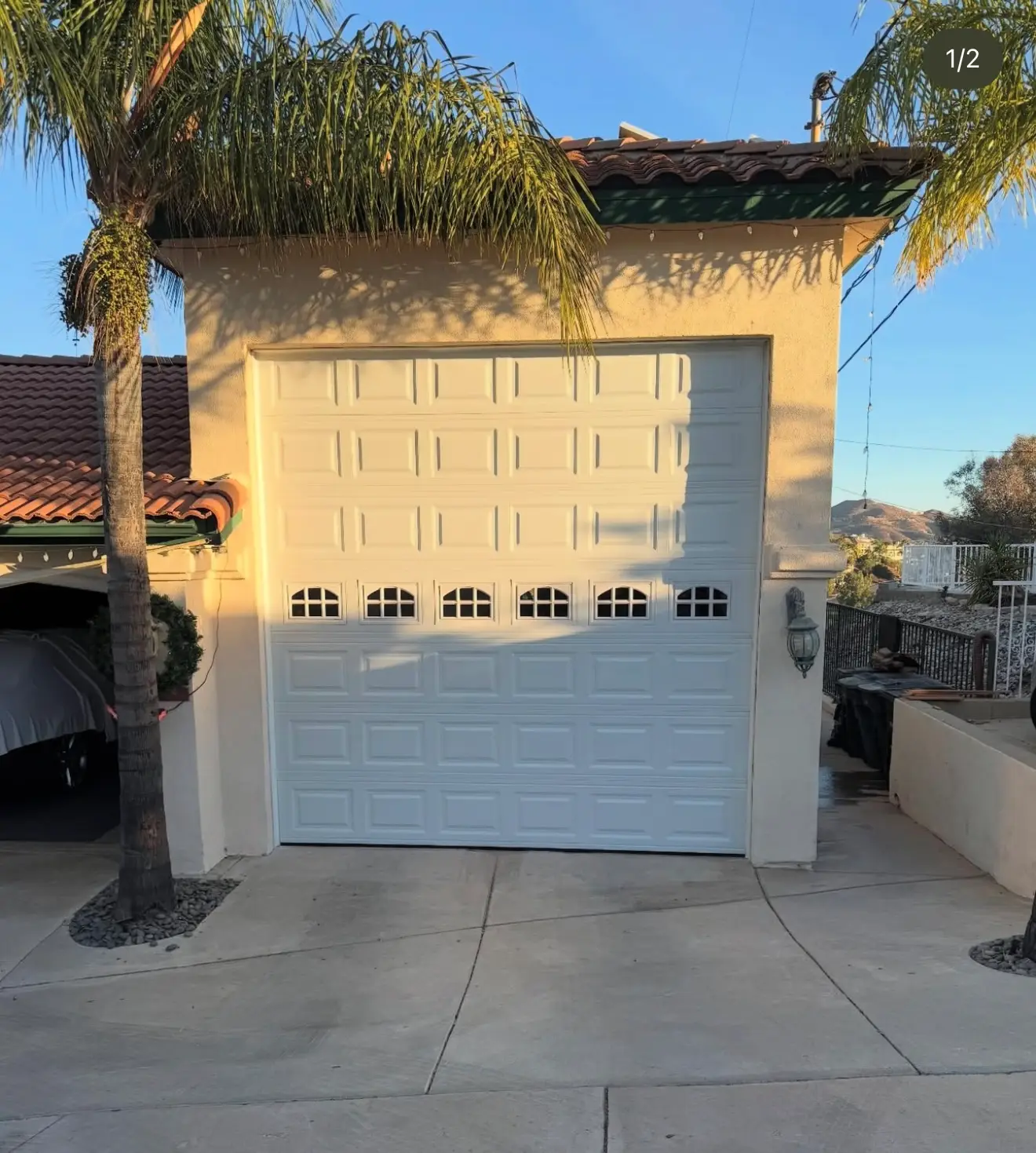
A squeaky opener or a spring that groans on cold mornings means it is time for a checkup. This garage door maintenance checklist for California homeowners covers exactly what to check and when. Menifee’s summer heat, desert dust and Santa Ana winds wear down hardware faster than milder climates. Cali Pros Garage Door has serviced Menifee garages since 2015 and sees the same pattern every year. Doors that skip seasonal upkeep fail earlier and cost more to fix.
Why Menifee’s Climate Wears Out Garage Doors Faster
Riverside County summers regularly push past 100 degrees. Menifee’s dry heat pulls moisture out of rubber seals and plastic rollers within a few seasons. Desert dust works into tracks and bearings, turning smooth rollers gritty and loud.
Santa Ana wind events push sudden gusts that stress panels and rattle loose hardware. Homes near Menifee Lakes and along the I-215 corridor see this wear pattern every fall. A door that looked fine in June can develop a wobble by October.
These conditions are why a seasonal checklist matters more in Menifee than in milder coastal cities. Regular maintenance catches the early signs before a spring snaps or an opener burns out. The next sections cover exactly what to check and how often.
What Belongs on a Monthly Garage Door Checklist
A five-minute monthly check catches most problems before they become expensive. Walk around the door and look for dents, rust spots or gaps in the spring coil above the opening. Cali Pros Garage Door technicians see doors fail faster when this simple habit gets skipped.
Monthly checklist items:
- Test the auto-reverse safety feature with a wood block or similar object
- Listen for grinding, popping or scraping during a full open-close cycle
- Check rollers for wobble, cracks or visible wear
- Confirm the tracks are clear of leaves, tools and other debris
Homeowners who prefer a hands-off approach can rely on scheduled garage door maintenance service instead of tracking each task alone. A trained technician verifies safety features and catches wear before it turns into a stuck door. Either approach works as long as it happens consistently.
How Often Should Hinges, Rollers and Tracks Be Lubricated
Menifee’s dust settles into every moving part, so lubrication matters more here than in humid climates. Hinges, rollers and the torsion spring need a silicone-based spray twice a year, in spring and fall. Never use WD-40, since it strips existing grease and attracts more dust.
Tracks should be wiped clean rather than greased, because oil on the surface attracts grit. A soft cloth removes debris without leaving residue. Worn or cracked rollers should be replaced rather than lubricated repeatedly.
Homeowners with plastic builder-grade rollers should consider upgrading during their next lubrication cycle. Steel and nylon options handle Menifee’s heat and dust better and last years longer. A professional roller and cable replacement visit swaps worn parts and re-tensions the door in one trip.
How to Test a Garage Door’s Spring Balance Safely
A torsion spring carries the full weight of the door and forces the opener to work harder as it weakens. To test balance, disconnect the opener using the emergency release cord. Lift the door manually to waist height and let go.
A balanced door holds its position at any height. A door that drops or rises on its own needs a spring adjustment. Cali Pros Garage Door technicians carry manufacturer-rated torsion and extension springs for same-visit replacement.
Torsion and extension springs hold dangerous levels of stored tension and should never be adjusted without training. A spring that shows a visible gap in the coil means the door should not be operated. A spring replacement service visit resolves the issue safely in a single appointment.

Are the Safety Sensors and Auto-Reverse Actually Working
Federal law has required auto-reverse protection on residential garage door openers since 1993. This safety feature stops and reverses the door the instant it senses resistance while closing. Testing it takes less than a minute.
Place a block of wood flat on the ground in the center of the opening. Close the door and watch for contact within about two seconds. A door that fails to reverse should not be used until it is adjusted or inspected.
The requirement comes from a federal mandatory safety rule enforced alongside industry standard UL 325. Photo eye sensors near the floor add a second layer of protection against entrapment. Both features should be tested monthly, not just once a year.
A grinding roller or a spring that will not hold balance will not fix itself. Same-day appointments are available across Menifee when scheduling allows, with upfront pricing before any work begins. Call 951-218-2664 or request a free estimate to get a technician out this week.
Seasonal Garage Door Maintenance for Menifee Heat and Wind
Menifee’s climate has two distinct stress seasons that call for extra attention beyond the regular calendar. Summer heat dries out lubricant and cracks rubber seals within a few months. Santa Ana wind season in fall adds sudden gusts that loosen hardware and rattle panels.
| Season | Priority Task | Why It Matters in Menifee |
|---|---|---|
| Spring (Mar-May) | Full lubrication and hardware tightening | Prepares the door for the summer heat cycle ahead |
| Summer (Jun-Aug) | Re-check lubrication, inspect seals monthly | Heat above 100°F thins lubricant and cracks rubber fast |
| Fall (Sep-Nov) | Balance test, tighten hardware after wind events | Santa Ana gusts loosen brackets and stress panels |
| Winter (Dec-Feb) | Test auto-reverse, inspect bottom seal | Occasional cold snaps stiffen springs and crack worn seals |
Skipping the seasonal check that matches Menifee’s weather pattern is the most common reason doors fail without warning. A five-minute inspection at each season change catches most problems early. This habit alone prevents most of the emergency calls technicians see in July and October.
DIY Maintenance or Call a Professional
Some garage door tasks are simple and safe for any homeowner to handle. Others involve stored tension that can cause serious injury without the right training. This table breaks down which tasks belong on each side.
| Task | DIY or Professional | Why |
|---|---|---|
| Lubricating hinges and rollers | DIY | Simple spray application, no tension involved |
| Tightening visible hardware | DIY | Basic wrench work |
| Cleaning photo eye sensors | DIY | No tools required |
| Testing balance and auto-reverse | DIY | Safe monthly routine |
| Torsion or extension spring adjustment | Professional | Extreme stored tension, serious injury risk |
| Cable replacement or repair | Professional | Cables carry the door’s full weight under tension |
| Track realignment after major damage | Professional | Requires specialized tools for correct alignment |
| Opener motor or circuit board repair | Professional | Electrical and mechanical expertise required |
Any task involving springs, cables or a door that has come off its tracks calls for immediate professional help. Waiting on these repairs risks injury and further damage to the opener. Same-day emergency garage door repair is available across Menifee for exactly these situations.
What Garage Door Maintenance Costs in Menifee, CA in 2026
Routine maintenance costs far less than emergency repairs caused by neglect. Prices vary based on door size, hardware condition and the extent of the service needed. The table below reflects typical 2026 pricing for the Menifee and Riverside County area.
| Service | Typical 2026 Range | What Affects the Price |
|---|---|---|
| Annual tune-up and lubrication | $29-$95 | Door size, number of moving parts |
| Full safety inspection | Often bundled with tune-up | Age and condition of hardware |
| Torsion spring replacement | $150-$400 | Spring type, door weight, single vs. double door |
| Roller replacement (set) | $100-$300 | Roller material, number replaced |
| Weatherstripping replacement | $75-$150 | Door width, seal type |
These figures are general estimates, not fixed quotes, and actual pricing depends on the specific door and site conditions. Older doors with rusted hardware or non-standard sizes often run higher. A technician can confirm exact pricing during an on-site or phone estimate.
Every task on this checklist supports the federal safety standard the Consumer Product Safety Commission requires for garage door openers. Staying current on maintenance keeps that safety system working as intended. It also keeps the overall repair bill lower over the life of the door.
Keeping a Menifee Garage Door Running All Year
A consistent maintenance checklist protects a garage door against Menifee’s heat, dust and wind better than any single repair. Monthly checks, twice-yearly lubrication and an annual balance test cover the tasks a homeowner can safely handle. Springs, cables and major realignment should always go to a trained technician.
Doors that skip this routine often show the problems covered in why garage doors fail faster in Menifee’s summer heat. Cali Pros Garage Door has helped Menifee homeowners stay ahead of these failures since 2015 with straightforward, upfront service. A quick call today can prevent the breakdown that would otherwise show up in August.
Prevent the breakdown that would otherwise show up in August. Cali Pros Garage Door has kept Menifee garages running smoothly since 2015, with same-day service and upfront pricing. A five-minute lubrication job and a full spring replacement both get the same careful attention. Call 951-218-2664 or contact the team online to schedule a maintenance visit today.
Frequently Asked Questions
1. How often should a garage door actually be serviced in a hot, dusty climate like Menifee?
A garage door in Menifee should get a five-minute visual and safety check every month. It also needs a full lubrication session twice a year and one professional tune-up annually. Hot, dusty inland cities need more frequent service than mild coastal climates. Heat dries out lubricant fast, and blowing dust works into rollers, hinges and tracks. Spring and fall are the best times for the twice-yearly lubrication pass. Spring prepares the door for summer heat, while fall addresses wear from Santa Ana wind events. Homeowners who use their garage heavily, such as two vehicles in and out daily, may want an extra check. Adding one in July catches early summer wear. Skipping seasonal service is the top reason doors fail without warning in this region. A professional annual inspection catches spring wear, opener strain and sensor drift that a visual check alone can miss. This schedule typically costs under $100 a year. It also prevents most of the $150 to $400 spring failures that show up when maintenance gets ignored.
2. Why does my garage door sound louder or grind more specifically during Santa Ana wind season?
A garage door that gets louder during Santa Ana wind season is usually reacting to dust and loosened hardware. It is rarely one single broken part. Strong, dry gusts in Riverside County push fine desert dust into roller bearings and track channels. Dust mixed with old lubricant turns into a gritty paste that grinds instead of glides. The same wind events rattle bolts and brackets already loosened by a summer of heat expansion. That adds a banging or knocking sound on top of the grinding. Homes in exposed areas, such as near open lots or along the I-215 corridor, notice this more than sheltered garages. The fix usually starts with wiping the tracks clean. Fresh silicone lubricant on the hinges and rollers helps, along with tightening any loose hardware. Grinding that continues after cleaning and lubrication points to worn rollers due for replacement. New noise during a windy week is common and rarely an emergency. It should not be ignored through another season, though.
3. What is the real difference between a monthly DIY check and a professional garage door tune-up?
A monthly DIY check is a five-minute visual and safety test. A professional tune-up is a deeper inspection that covers tasks homeowners should not attempt themselves. The DIY version covers testing the auto-reverse feature and listening for new noises. It also means checking rollers for wear and clearing debris from the tracks. A professional tune-up adds a full lubrication service and a torsion spring tension check. It also includes cable inspection, opener force adjustment and hardware tightening throughout the system. Technicians carry tools to measure spring tension precisely. They also spot early corrosion or fatigue that a homeowner’s walk-around will miss. The two are not competing options. Monthly DIY checks catch sudden problems between service visits. An annual professional tune-up handles the technical work that keeps the whole system balanced and safe. Skipping the DIY checks means small issues go unnoticed for weeks. Skipping the professional tune-up means spring wear and opener strain build up unseen until something fails. Doing both on a regular schedule is what actually prevents breakdowns.
4. Can lubricating a garage door too often actually cause more problems than it solves?
Over-lubricating a garage door will not damage it directly. Applying too much of the wrong product in the wrong places causes buildup that attracts dirt and debris. A light coat of silicone spray or white lithium grease twice a year is enough for hinges, rollers and springs. Heavier or more frequent application just creates residue that dust sticks to, especially in a dusty climate like Menifee. The bigger mistake is lubricating the wrong parts. The inside of the tracks should never be lubricated, since grease there attracts grit. That buildup can make the door skip or bind instead of rolling smoothly. Only the top curved section of the vertical track, where rollers meet the horizontal run, needs a very light application. Using WD-40 instead of a proper garage door lubricant is another common error. It acts as a degreaser that strips existing protection and leaves parts dry again within weeks. The safest approach is a light, targeted application twice a year with a silicone-based product made for garage doors. Wipe away any excess after each use.
5. How can I tell if my garage door spring is about to break before it actually snaps?
The clearest warning signs are a visible gap between the coils and a door that feels much heavier to lift. New creaking or popping sounds during operation are another warning sign. A healthy torsion spring sits tightly coiled above the door opening with no separation between the wraps. Any visible gap means the spring has lost tension and could fail at any time. Homeowners may also notice the opener working harder or taking longer to lift the door. That happens because a weakening spring shifts more of the load onto the motor. Standard torsion springs are rated for roughly 10,000 cycles, or about 7 years of typical use. Springs approaching or past that age deserve extra attention even without obvious symptoms. A loud bang followed by a door that will not lift means a spring has already broken. Any of these signs mean the door should not be used. A professional should inspect it and replace the spring if needed. Adjusting springs without training carries a serious risk of injury.
6. Is it normal for a garage door opener to strain more in summer heat, or does that mean something is wrong?
Some increase in opener effort during peak summer heat is normal. An opener that struggles noticeably or stalls mid-cycle usually points to a real problem instead. Heat causes garage door parts to expand slightly and can thin out lubricant. Both add friction the motor has to overcome, so a little extra strain on the hottest afternoons is expected. It is worth investigating further if the opener consistently takes longer to finish a cycle. The same is true if it makes a grinding or straining sound, or shuts down mid-cycle. These signs point to a weak spring forcing the motor to carry more weight. They can mean dried-out lubrication or an aging opener nearing the end of its 10 to 15 year service life. A quick balance test tells the difference. A door that holds its position when lifted halfway by hand has healthy springs. The strain is more likely lubrication or opener age in that case. A door that drops or rises on its own needs professional attention regardless of season. Ignoring consistent summer strain often leads to a failed opener or a snapped spring exactly when the heat peaks.